

Ignoring the bulging veins on my legs for years was an easy thing to do. Like many other individuals, I believed varicose veins were simply an undesirable outcome of either the aging process, pregnancy, or just my unfortunate genetics. My first sign of pain was the swelling in my legs. I realized that in fact, the swollen, leg veins I could see were far more significant than an issue of cosmetics. I began to understand how to determine when varicose veins require medical attention. This perhaps the most valuable lesson was the need to form decisions on the necessity of medical treatment from the actual health problems. I learned that early intervention could spare many individuals from complications that most people do not associate with venous disease.
The Meaning of Varicose Veins
Upon spotting noticeable veins on my calves and thighs, I did not know what was happening under my skin. Varicose veins occur when the one-way valves of the vein of a person’s legs become weakened, and as a result, blood starts to flow backward and pool, causing the veins to bulge and twist. However, the fact that these scars represent something worse than the surface means that a person might be suffering from chronic venous insufficiency, a condition that involves the circulatory system being unable to effectively return blood to the heart from the legs. Now, I know chronic venous insufficiency isn’t just an aesthetic problem. It means my venous system is not working as it should be.
Varicose veins are a common condition for a variety of reasons, but as I started presenting research for this paper, I was surprised by their prevalence. I found research suggesting roughly thirty-five percent of adults in the United States deal with some form of venous insufficiency, and women statistically suffer more due to factors like hormones and pregnancy. Still, people of all genders, ages, and activity levels are impacted by venous insufficiency. Because of this, it becomes a common challenge for people to decide when their veins stop being a nuisance and with respect to their medical condition, need to see a professional.
Symptom Recognition
Most professionals present medical research more objectively than I do. I have been open about the factors that make this difficult for me so others can understand my rationale and the research I have found. I started to take the symptoms of venous insufficiency more seriously when I started to personally experience some of the more serious complications that I had been tolerating. After standing for prolonged periods, I could starting feel my legs aching. After work, I would feel fatigued in my legs, and I would feel this way even if I had not been active. My ankles and lower legs would regularly swell, and by the end of the day my shoes would feel tight and my legs would feel tight. Swimming stretches in the pool are a common way to relieve this sensation. These symptoms indicated that the body’s venous insufficiency was more than just a surface problem.
I have the knowledge of the healthcare workers I spoke to. They explained to me the specific symptoms that suggest the need for medical attention. It is shown that the presence of pain and aching in the legs that is persistent and gets worse during long periods of standing or sitting and gets better when the legs are elevated indicates that comfort and function are being affected by venous pressure. Leg pain that is thobbing or burning, leg muscle cramping, especially at nighttime, and heaviness or fatigue in the legs are all symptoms of venous insufficiency. I thought symptoms were normal with getting older, or being active and did not see that they are symptoms that need to be treated.
The Progressive Nature of Venous Disease
With varicose veins, I learned that they do not improve on their own; they continue to get worse if no steps are taken to intervene. The nature of chronic venous insufficiency is that it is progressive; mild symptoms can be cosmetic and discomfort, and can create major complications if not treated. Treating venous disease earlier on has benefited and can continue to benefit many others from having to deal with more severe symptoms that may follow. I wish I had known this knowledge and treatment of venous disease earlier on to help me prevent the severe symptoms.
Throughout the course of my venous insufficiency, I noticed the skin surrounding the affected areas was beginning to change. Discoloration of my skin, more specifically my lower legs, was very concerning to me; my skin would take on a brown and red coloration that would never disappear. The skin was also dry, itchy, and overly sensitive to touch. My problem stemmed from the chronic poor tissue circulation and ventilation. My healthcare professional said that the skin changes are a secondary effect of some of the more chronic tissue changes due to the poor tissue circulation and ventilation. The skin can also become very thin and easily damaged. This condition is known as lipodermatosclerosis, which is the hardening of the skin and the underlying tissue. The most serious complication of venous disease, and the most concerning in my case, is the development of venous ulcers. These are deep, open wounds that are very difficult to heal and require great medical attention.
Understanding the Medical Risks Beyond Discomfort
Even before my health troubles with varicose veins began, I did not consider that visible blood vessels, such as varicose veins, pose genuine medical risks. A condition I learned about is called superficial thrombophlebitis. In this syndrome, varicose veins get inflamed with collated blood as a result of deep vain thrombosis. Although this condition does not pose the same risk as deep vein thrombosis (which could cause a blood clot to travel to the lungs and result in death), it does present a medical problem that needs to be treated. I learned that individuals with chronic venous insufficiency are in the higher risk group for blood clots, and this risk is directly associated with the # and length of immobility, and certain risk factors that are present.
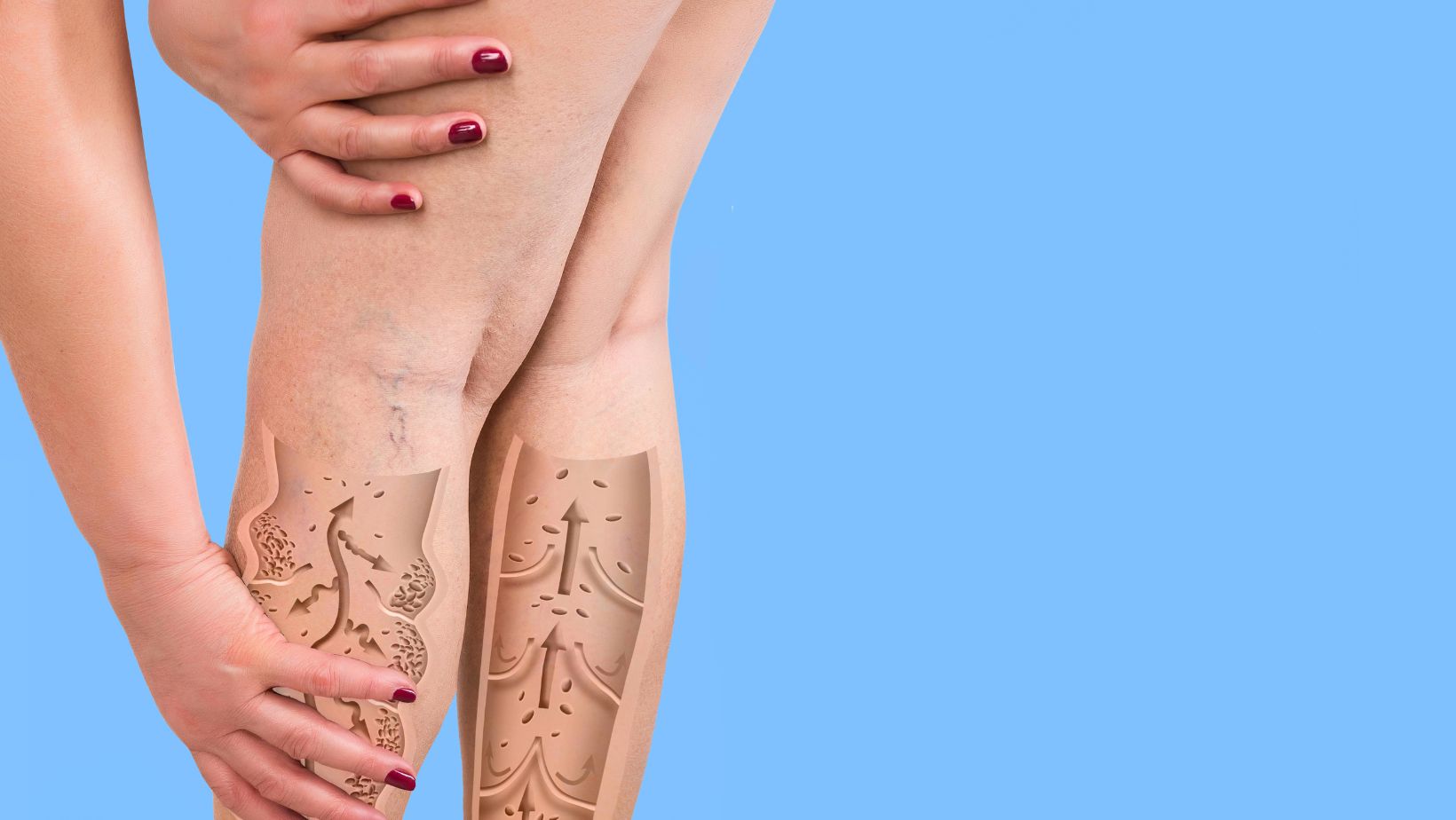
Even the risk of bleeding with varicose veins was a surprise to me. Ruptures of superficial blood vessels do not pose significant medical risks, however, because they are just beneath the outer layer of the skin, they are more susceptible to trauma and are under greater than normal stress. I had a little bump and was shocked that I bled so much and that I was so slow to get it under control. This was the straw that broke the camel’s back. I could no longer put off a professional evaluation.
When Treatment Becomes Medically Necessary
Based on my understanding and research, there are situations in which treatment of a varicose vein could be considered medically necessary rather than cosmetically necessary. Active venous ulceration or history of venous ulceration is an absolute indication for treatment because these wounds are life altering and can lead to grave infections/complications if untreated. The same applies to recurrent episodes of superficial thrombophlebitis and for active venous ulcers, bleeding (spontaneous or trauma related) from varicose veins signals a dangerous condition related to avascular engorgement and weakening of the veins.
The above complications, albeit grave, are not the only definers of medical necessity for treating varicose veins. Pain that is persistent and affects normal daily functioning, leg pain or leg cramps (especially at night, because that is when venous stasis symptoms are likely to occur), skin changes (indicative of progressive venous insufficiency) and (worsening) skin changes are medical indications. The realization of the symptoms is a key factor and is the reason that planning daily activities, work, or sleep because of the symptoms is a reason for medical treatment of the condition, regardless of the presence of age or classifiable complications.
Locating Optimal Care and Treatment Solutions
Upon deciding to get evaluated professionally, I noticed modern solutions for varicose veins have dramatically changed from what I have heard to be very invasive and surgical. Modern solutions are mostly minimally invasive, done outpatient, and require little to no recovery time. Endovenous laser ablation, radiofrequency ablation, and even uteri sclerotherapy are less invasive than traditional vein stripping surgery.
For me, the correct specialist made a huge change in both the experience and the outcome of the treatment. Patients in the Houston area, and in a similar situation, can access specialty care from the Varicose Vein Treatment in Woodlands, which offers the necessary expertise for patients to ensure proper evaluation and treatment. I was surprised that vein specialists are able to do complex ultrasound evaluations and look, beyond the me of the varicose veins to the entire venous system and to all of the sources of venous insufficiency.
The Value of Early Intervention
In hindsight, waiting for the first set of my varicose veins to get worse is something I would not do again. A set of varicose veins, while indicative of something that requires treatment, is not enough to guarantee that a set of varicose veins requires treatment. Many do not. However, I would have been able to set a baseline with a vein specialist and monitored changes, including the possibility of needing to take more drastic measures. This would have saved me some of the complications that I dealt with. I would have been able to spare the years of discomfort.
Another thing I have learned is that lifestyle changes don’t do all that much that are established venous insufficiency. Obeying the rules of venous health did help me symptomatically. The exercise, the weight control, the compression, and the leg elevation did help me, however, did not remove the varicose veins or fix the damaged valves. When medical measures are necessary, these measures should be considered adjunct rather than alternative.
Making the Decision for Your Health
When to begin varicose vein treatment is dependent on individual circumstances. Not everyone will have the same symptoms and not everyone will have the same goals for their health. Dismissing varicose veins as a cosmetic issue means that more serious medical concerns will go unaddressed. If there is any visibility of the symptoms, such as pain, swelling, changes in the skin, or any other complications, that should be enough to seek a professional evaluation. Even if there are no severe symptoms or complications, if there is visible worsening of the symptoms or development of new ones, that is enough reason to see a specialist for varicose veins.
Varicose veins should certainly be viewed and treated from a medical rather than cosmetic standpoint. The quality of our lives by means of our health, activity levels, and overall wellness is directly correlated to the state of our vascular system, and subsequently, the vascular system deserves to have treatments that will preserve the condition of the vascular system. Taking a medical approach to varicose veins should be the first step in preserving vascular health and reducing long term complications.