
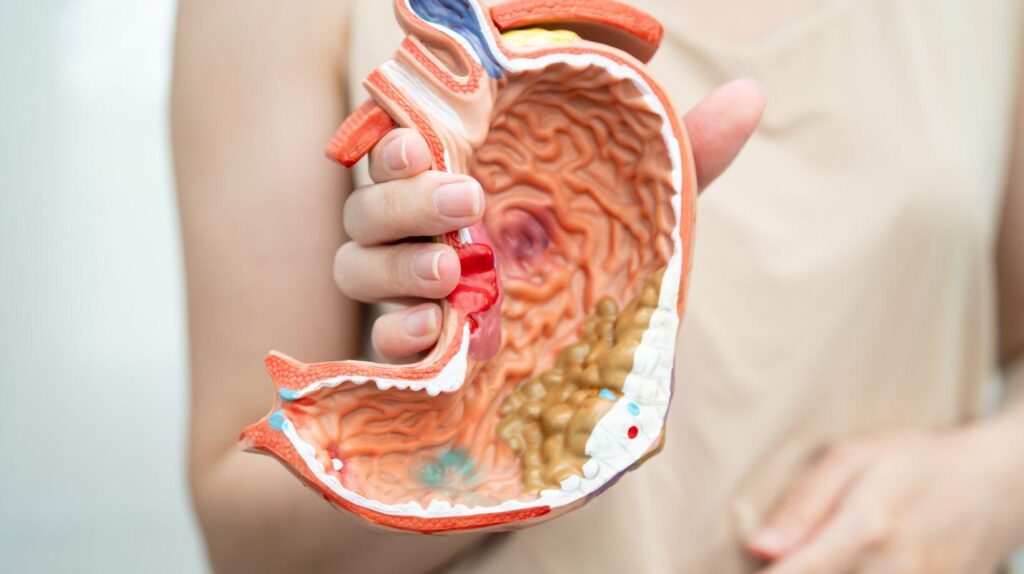
The information here is designed to educate newly diagnosed gastric cancer patients and their family members about their treatment and what to expect. Treatment options and outcomes for gastric cancer vary depending on factors such as stage at diagnosis and individual patient characteristics. And, with the vast amount of information available about HER2 positive gastric cancer and its various treatments, Patients may find educational information helpful when discussing their care with healthcare professionals and healthcare teams.
What Does HER2-Positive Gastric Cancer Mean?
HER2 stands for human epidermal growth factor receptor 2. HER2 is a protein in cancer cells. By signalizing cell division HER2 can encourage cancer cells to grow. Some gastric cancers have an abnormal amount of HER2 proteins in them, or they have an altered HER2 gene. These types of gastric cancers are called HER2-positive.
Most gastric cancers are HER2 negative and need to be tested for HER2 status using a pathologic method and clinical information to determine if a patient is a candidate for HER2-directed therapy. In addition to the HER2 status of a patient’s cancer, there are many other factors that a doctor will consider when making treatment decisions. The location of the cancer, the stage of the cancer, the patient’s overall health, previous treatment, and many other factors can all affect the treatment that a patient receives for their cancer.
Why HER2 Testing Matters
HER2 testing looks to determine if gastric cancer cells are candidates for HER2-directed treatment. For HER2-positive gastric cancer, samples of tumor tissue from a biopsy or previously removed tumor are tested. The HER2 test looks for HER2 proteins in cancer cells and for the number of copies of the HER2 genes in cancer cells. The results from these tests will be combined with clinical information and discussed with oncologists to help make treatment decisions.
There are several different ways to test HER2 in tumor tissue and these can measure the amount of HER2 protein in cancer cells or the amount of HER2 genes in the cancer cells. The results from these tests are considered in the context of other clinical features.
Oncologists take into consideration the laboratory test or method that has been used for HER2 testing, as well as the clinical situation of each patient. For this reason, it is advisable to ask oncologist what test results mean and what impact they could have on treatment.
Treatment Approaches for HER2-Positive Gastric Cancer
In terms of treatment, patients with HER2-positive gastric cancer are treated for the cancer as well as the stage of cancer. This can include chemo, targeted therapy and/or immunotherapy. Some cancer may need to be removed with surgery and then patients can be treated for remaining cancer cells.
Even when cancer is suited for HER2 directed therapy, other treatments like chemo can still be important. The cancer is made up of cancer cells with different biological characteristics and treatments are usually given to attack the cancer in more than one way.
Chemotherapy also is used to treat gastric cancer because there are usually several different cancer cells with different biological characteristics within a cancer. Treatment is given in a combination to attack the cancer cells by more than one route.
It is not possible to provide a detailed treatment plan for gastric cancer patients as it differs from one patient to another. Important factors for determining adequate treatment are whether resection of all tumors, spread to distant sites, previous treatment and the patient’s general condition.
For patients researching her2 positive stomach cancer treatment, understanding these factors can help them discuss their options with their healthcare team.
Understanding Targeted Therapy
The major distinction between targeted therapy and chemotherapy is that targeted therapy can be designed to attack specific cancer characteristics, such as the HER2 pathway. Even though cancer with HER2-positive tumors may be treated with targeted therapy, not all these tumors will respond. Some may have additional features that allow them to continue growing.
These types of cancer can continue to grow because of other unknown cancer cell traits or because of unknown cancer cell traits that allow it to continue to grow. In many cases cancer continues to grow while the patient is on these types of treatments. Treatment response varies among individuals and is typically assessed through clinical evaluation, and testing Patients are usually assessed on a regular basis by their doctors to get an idea of how cancer is changing.
The Role of Immunotherapy
Immunotherapies are of growing interest in the treatment of gastric cancer, because these agents try to enable the patient’s immune system to recognize and attack the cancer cells.
Immunotherapies, including some that are under investigation, are used to treat gastric cancer and generally need additional biomarkers and clinical characteristics to determine whether they will be beneficial to an individual. Even if different types of treatment are used, there is a risk of serious side effects. These need to be monitored by the patient’s medical team.
Monitoring Treatment and Side Effects
The impact that cancer treatment will have on the cancer itself and on the patient needs to be closely monitored by the doctor. This can include the results of imaging studies, blood tests, clinical assessment and patients’ reports of symptoms and their effects.
The side effects associated with treatment with chemotherapy, targeted therapy and/or immunotherapy vary from drug to another. Cancer treatment can cause fatigue, nausea, decreased blood counts and loss of appetite, to name a few examples. Some side effects can be serious and even life-threatening and need to be monitored by the treatment team. It is important to report any new or worsening symptoms to doctor or healthcare team. Doctor can assess whether symptoms are a side effect or something more serious.
Living With HER2-Positive Gastric Cancer
As well as treating the physical effects of gastric cancer, patients are likely to experience a range of emotions and may have various practical concerns. The cancer and its treatment can affect patients’ appetite and how they feel, as well as causing stress, fatigue and worries about the future and financial implications.
Even more important than the physical impact of gastric cancer is the way it can affect patients emotionally and in terms of organization. Patients should maintain contact with their family and their health care team to deal with all aspects of their disease and their treatment. Don’t hesitate to ask for help with symptoms, emotional problems, nutrition problems etc. whilst you are on treatment for gastric cancer.
Questions Patients Can Ask Their Healthcare Team
- What does my HER2 test result mean?
- What stage is my gastric cancer?
- Which treatment options are appropriate for me?
- Could targeted therapy be part of my treatment?
- What side effects should I watch for?
- How will my treatment response be monitored?
- Are additional biomarker tests needed?
- What support is available for nutrition and emotional well-being?
Preparing questions in advance may help facilitate discussions with the healthcare team and allow you to be more involved in treatment.
Looking Ahead
Tumor testing and targeted treatments for gastric cancer are rapidly becoming more individualized. FDA approves zanidatamab-hrii and tislelizumab-jsgr for HER2 status may help inform treatment selection alongside other clinical factors.
When it comes to individual patients with cancer, there is no one size that fits all treatment policies. This will depend on a variety of factors including the nature of the tumor, the patient’s medical history, any previous treatments and a variety of other clinical factors. If you or a loved one has been diagnosed with her2 positive stomach cancer and you are looking for information regarding the treatment options available, it would be advisable to seek advice from a qualified and experienced Oncology team.
Disclaimer: The information provided in this article is intended for educational purposes only and should not be interpreted as medical advice, a clinical guideline, or a recommendation for any specific treatment.