
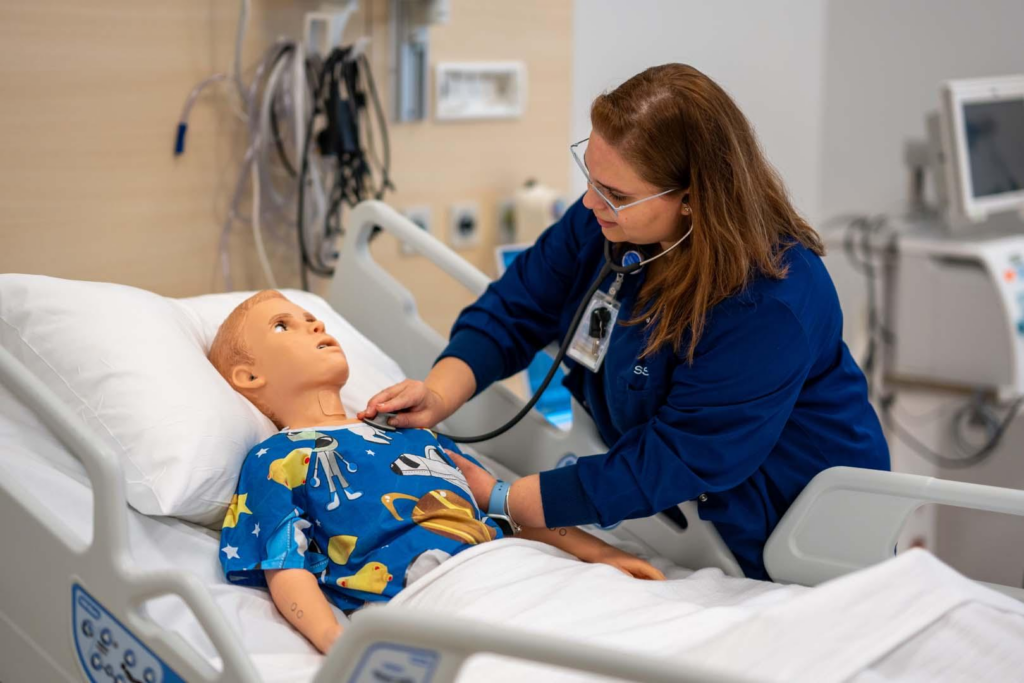
A routine medical examination can tell a healthcare professional a great deal about a child’s health, even before laboratory tests or imaging are considered. Listening to the lungs with a stethoscope remains one of the simplest ways to assess breathing and identify signs that may require further investigation. However, examining a child is not quite the same as examining an adult. Differences in anatomy, respiratory patterns, and behavior make pediatric auscultation a skill that requires specific knowledge and regular practice.
Children’s respiratory systems change considerably as they grow. A newborn’s breathing pattern, for example, differs from that of a school-aged child. For healthcare professionals, understanding these differences is essential to recognizing what is normal and what may indicate a respiratory problem.
Understanding the Unique Characteristics of Children’s Breathing
The respiratory system continues to develop throughout childhood. Infants and younger children have smaller airways, different chest wall characteristics, and higher normal respiratory rates than adults. These factors influence both breathing mechanics and the sounds that clinicians hear through a stethoscope.
A child’s respiratory rate is particularly important during an examination. A rate that would be considered unusually fast in an adult may be normal for a young infant. The clinician must therefore interpret breathing sounds alongside the child’s age, respiratory effort, oxygen saturation when measured, and overall condition.
Another important factor is the structure of the chest. Sounds can transmit differently through a child’s smaller thorax, making it necessary to understand where and how to listen. Identifying subtle differences between normal breathing and abnormal respiratory sounds requires familiarity with pediatric anatomy.
Auscultation is also only one part of respiratory assessment. Clinicians observe how comfortably the child breathes, whether the chest moves symmetrically, and whether signs such as nasal flaring or chest retractions are present.
What Different Lung Sounds Can Tell Healthcare Professionals
Normal respiratory sounds generally reflect airflow moving through the airways and lungs. Changes in these sounds may provide clues about conditions affecting the respiratory system.
Wheezing is often associated with narrowed airways and may occur in children experiencing asthma or certain respiratory infections. Crackles can sometimes be heard when air moves through small airways or lung regions affected by fluid or other changes. Stridor, a high-pitched sound usually heard during inspiration, can indicate an obstruction or narrowing in the upper airway.
However, the presence of an unusual sound does not automatically establish a diagnosis. Similar sounds can occur in different conditions, and some serious respiratory problems may produce surprisingly subtle findings.
For example, a child with breathing difficulties may require additional assessment even when obvious wheezing is absent. Clinicians must consider the child’s medical history, symptoms, examination findings, and any necessary diagnostic tests.
This is why learning pediatric auscultation involves more than memorizing individual sounds. Healthcare professionals need to understand their possible significance within the broader clinical picture.
Why Pediatric Auscultation Can Be Difficult to Learn
Medical students and newly qualified healthcare professionals often encounter practical challenges when examining children.
Young patients may become frightened, restless, or uncomfortable during an examination. Some cry when approached with a stethoscope, making it harder to distinguish breathing sounds. Others may move frequently or have difficulty following instructions to breathe normally.
These situations are part of everyday pediatric practice, but they can make clinical training unpredictable.
Another challenge is limited exposure to specific respiratory findings. A student may learn about a particular abnormal lung sound in a textbook without having an opportunity to hear it during a clinical placement.
Even when a suitable patient is available, repeated examinations may be inappropriate or uncomfortable for the child. Educators therefore need teaching methods that allow learners to practice without placing unnecessary demands on patients.
Listening to recorded respiratory sounds can help, but recordings alone do not teach students how to position a stethoscope, identify anatomical landmarks, or follow a consistent examination sequence.
These practical skills require a more hands-on approach.
How Medical Simulation Supports Pediatric Respiratory Training
Simulation-based education offers a controlled environment in which healthcare students can develop examination skills before applying them during supervised patient care.
Rather than relying entirely on unpredictable clinical encounters, educators can recreate particular findings and allow learners to examine them repeatedly.
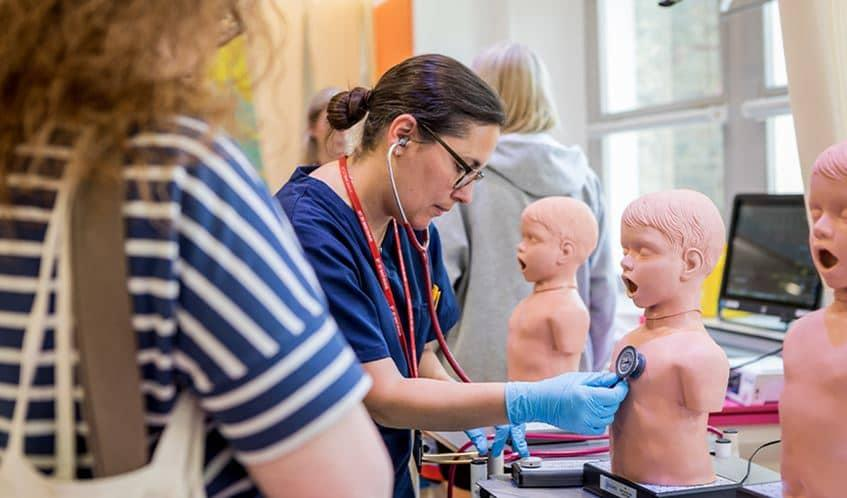
For example, a student learning to identify abnormal pediatric lung sounds can use a pediatric auscultation task trainer, such as MedVision’s Pediatric MATT, to practice listening at different anatomical locations. According to the manufacturer, the simulator includes multiple cardiac, pulmonary, and abdominal auscultation points, anatomically recognizable landmarks, and a library of clinical sounds.
The educational value of this approach lies in combining sound recognition with the physical process of examination.
Students learn where to place the stethoscope, how to compare sounds between different regions, and why a systematic approach matters.
Instructors can also guide learners through scenarios with different respiratory findings. A lesson might begin with normal breath sounds, introduce wheezing or crackles, and then ask students to explain how those findings would affect their next assessment steps.
Repetition is especially useful for beginners. Students can return to a difficult sound or examination technique until they become more comfortable with it.
Simulation also creates opportunities for feedback. Educators can observe examination technique, identify errors in stethoscope placement, and discuss the clinical reasoning behind each decision.
Although simulation cannot fully reproduce the complexity of interacting with a real child, it provides a useful foundation for supervised clinical experience.
Connecting Respiratory Assessment With Better Patient Care
Recognizing respiratory problems early is an important part of pediatric healthcare. Children can sometimes experience changes in their respiratory condition quickly, which makes careful assessment especially valuable.
Auscultation contributes to this process by providing information about airflow and possible abnormalities. However, its findings should always be interpreted alongside the wider examination.
A child experiencing significant respiratory distress, for instance, needs prompt clinical assessment regardless of whether a particular abnormal sound can be identified.
Good respiratory care also involves understanding the different ways children respond to illness. Age, medical history, underlying conditions, and the severity of symptoms all influence clinical decisions.
This broader perspective is particularly relevant to healthcare approaches that emphasize respiratory health, oxygen delivery, and recovery. Supporting healthy breathing begins with accurate assessment rather than assuming that a single treatment or technology can address every respiratory concern.
Better training can help healthcare professionals recognize important warning signs, communicate findings clearly, and make more informed decisions about when further assessment is necessary.
Building Confidence Through Practice and Experience
Pediatric auscultation is a practical skill that develops through a combination of anatomical knowledge, guided training, and real clinical experience.
Modern simulation tools make it possible to practice examinations in a structured setting, encounter a wider variety of respiratory sounds, and receive feedback without creating unnecessary risks for patients.
The goal is not to replace clinical placements or the judgment of experienced healthcare professionals. Instead, simulation helps learners prepare for situations they will eventually encounter in everyday practice.
When medical students understand both the sounds they hear and the clinical context in which those sounds occur, they are better prepared to approach pediatric respiratory examinations carefully, systematically, and confidently.