
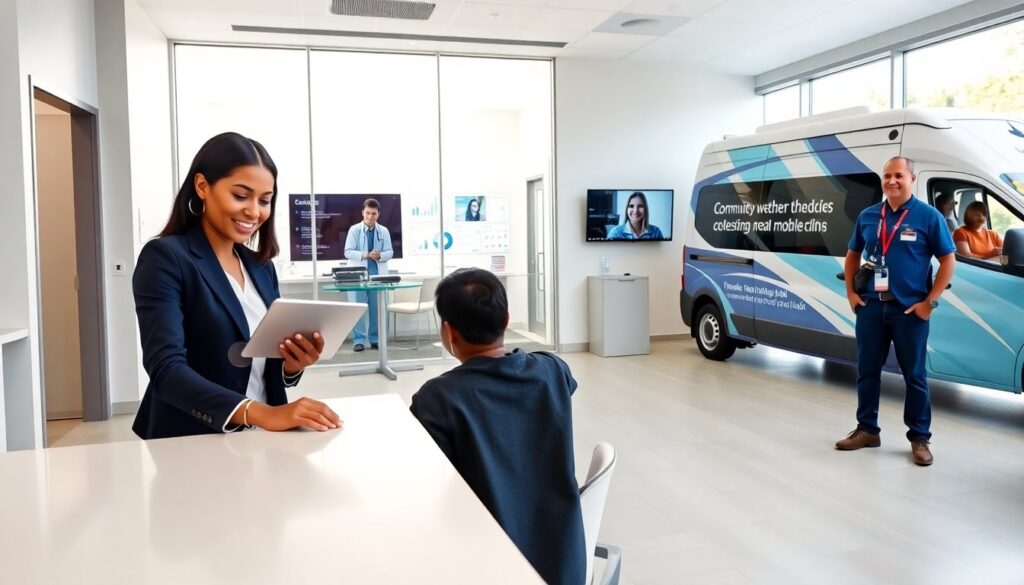
Comfortglobalhealth fostering a deeper understanding provides clear access to medical care. The organization connects patients with clinics, telehealth, and insurance partners. It gives practical steps to get care, verify coverage, and manage costs. The team focuses on reachable services, reliable providers, and fast enrollment. Readers will learn who the program serves, what services it offers, and how to use it.
Key Takeaways
- Comfort Global Health improves access to medical care for low-income families and underserved communities through clinic partnerships and telehealth services.
- The organization uses a hub-and-spoke model and mobile clinics to connect patients with local providers and regional specialists efficiently.
- Patients can easily start care by visiting Comfort Global Health’s website or calling a partner clinic, with support from care navigators throughout the process.
- Sliding-fee scales and bundled payment pilots help make primary care affordable, while community health workers provide education and home visits.
- Comfort Global Health supports employers and insurers by advising on benefits and establishing on-site clinics to lower costs and reduce missed workdays.
- Timely follow-up and care coordination ensure patients receive comprehensive treatment, including referrals, medication management, and ongoing support.
Who Comfort Global Health Serves And Their Core Mission
Comfort Global Health serves low-income families, migrants, local clinics, and employers. The group targets people who lack steady access to primary care. It works with community clinics, mobile units, and public health centers. The mission states clear goals: expand access, lower cost, and raise care quality. The team trains local staff, shares clinical tools, and funds startup services.
Comfort Global Health partners with governments and non-profits. The group builds simple referral networks. It links clinics to telehealth hubs and specialty providers. The group measures results with basic metrics. Staff track visit numbers, wait times, and patient follow-up. They publish summaries that show improvements in access and in continuity of care.
Comfort Global Health also supports employers and insurers. The group advises on benefit design and on in-network options. It helps employers set up on-site clinics and hybrid care plans. This work reduces missed workdays and lowers short-term health costs. The program aims to make primary care reliable and easy to use for people across income levels.
Services, Programs, And Care Delivery Models Explained
Comfort Global Health runs three main service lines: primary care access, telehealth, and care coordination. Primary care access uses clinic partnerships to offer routine visits, vaccinations, and chronic disease checks. Telehealth connects patients to nurses and to physicians by video or phone. Care coordination assigns a case manager to track referrals and to follow up after visits.
The group uses a hub-and-spoke model that links local clinics to regional specialists. This model lets patients see specialists without long travel. Comfort Global Health adds mobile clinics for remote areas. Mobile teams provide screening, maternal care, and basic labs. The program keeps drug lists and lab panels simple to cut cost and to speed treatment.
Programs include sliding-fee scales, bundled payment pilots, and a community health worker program. Sliding fees let patients pay based on income. Bundled payments encourage clinics to manage whole episodes of care. Community health workers visit homes, teach care steps, and help with medication plans. The group also runs public health campaigns that focus on prevention and on clear self-care steps.
How To Get Care, Coverage Options, And What To Expect As A Patient
A patient can start by visiting the Comfort Global Health website or by calling a local partner clinic. The site lists clinics, telehealth hours, and walk-in options. A new patient fills a short intake form that asks about symptoms, income level, and insurance. Staff assign a care navigator who explains next steps and available costs.
Coverage options include public insurance, partner private plans, and charity programs. Comfort Global Health helps patients check eligibility for public programs and for charity grants. The group guides patients through enrollment and helps with paperwork. If a patient lacks insurance, staff discuss sliding fees and low-cost medication options.
At the first visit, the clinician reviews history, offers tests, and makes a simple care plan. The clinician explains medicines, follow-up timing, and warning signs that require urgent care. If the patient needs a specialist, the care navigator arranges the referral and books the first visit. Telehealth visits usually occur within 48 hours. In-person appointments typically occur within one to two weeks.
Patients receive a care summary after visits. The summary lists diagnosis, medicines, next steps, and contact numbers. The group asks patients for feedback to improve services. Staff follow up by phone or message to confirm that patients filled prescriptions and to check symptoms.